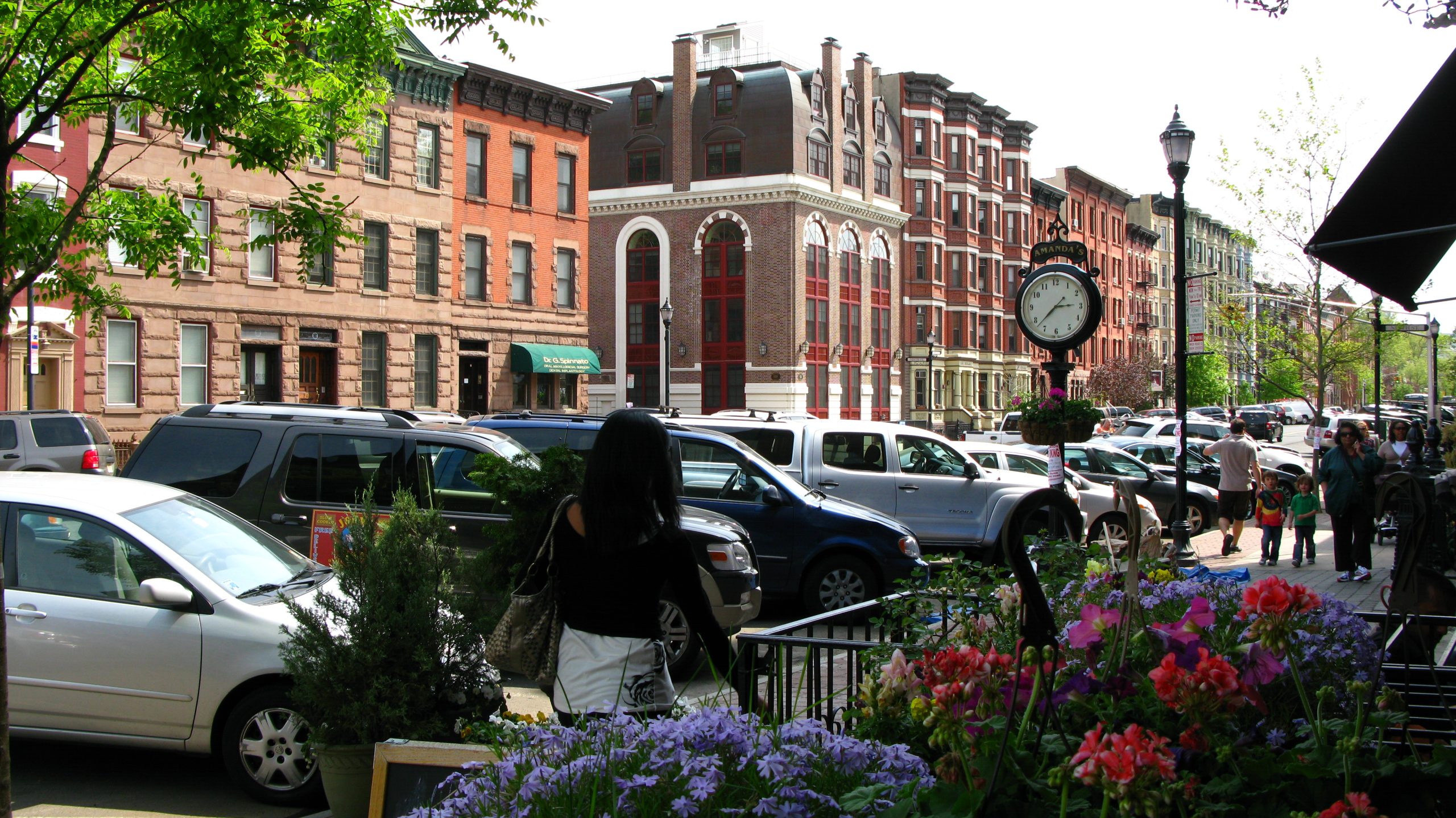






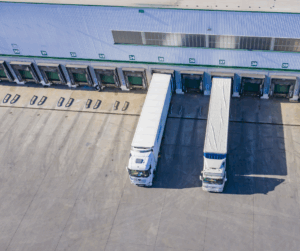
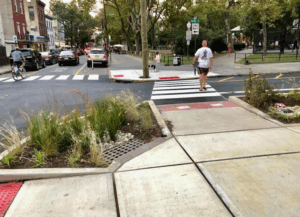
The changing nature of shopping means people are more likely to have things delivered to them than go to a store to buy them. At the same time, people increasingly want to live in mixed-use neighborhoods where they can walk to local destinations. How should we be thinking about the safety of pedestrians and other non-motorized travelers in an era of increasing truck traffic? Port Traffic and E-Commerce: The Twin Drivers of New Jersey’s Goods Movement BoomThe movement, storage, and distribution of freight is big business in New Jersey (and getting bigger). As of the 2019 County Business Patterns report, goods movement industries—roughly, those classified under wholesale trade (NAICS code 42) or transportation and warehousing (NAICS codes 48 and 49)—account for one out of every eight jobs (12.5%) located in New Jersey, the highest percentage among the 50 states.The boom in goods movement has two main drivers. One is the presence in North Jersey of the nation’s second-busiest container port, the Port of New York and New Jersey, the major facilities of which are located on the New Jersey side of the Hudson River in Newark, Elizabeth, and Bayonne. Because it is centrally located among the Northeast’s constellation of large metropolitan areas, the port is a major point of entry for imported goods arriving from Europe and from the growing economies of South Asia (e.g., India and Pakistan). And the 2016 widening of the Panama Canal means that some ships carrying goods from our major trading partners in East Asia (i.e., China, Japan, South Korea, Taiwan, Vietnam) that are bound for markets in the eastern United States can proceed directly to East Coast ports instead of docking at Los Angeles, Oakland, or Seattle and sending their payloads across the continent by rail. This more direct shipping route from East Asia has boosted the Port of New York and New Jersey’s volume even further. The growth of traffic at the port has sparked a wave of warehouse development across northern and central (and—increasingly—southern) New Jersey, as shippers scramble for spaces for storing, sorting, and distributing all of the incoming freight.It should be noted that South Jersey has ports too—in Camden, Paulsboro, and Salem—and cargo volume is booming there as well. But the South Jersey ports handle a much smaller volume of cargo than the ports in North Jersey, and they also specialize in bulk commodities like steel, plywood, and cocoa beans that are more likely to be shipped by rail than by truck, making their impact on the state’s road network less pronounced and their land-use footprint less visible. Unlike the port, the other driver of goods movement is not unique to New Jersey but is happening everywhere: the growth in e-commerce. Instead of driving their personal vehicles downtown or to the mall or the big-box retail center to shop, Americans are increasingly buying their stuff online and having it delivered to their home in someone else’s vehicle—the ubiquitous UPS, FedEx, and Amazon delivery vans. This change in the way people shop is having nationwide effects. According to the 2019 County Business Patterns report, “Transportation and Warehousing led all business sectors with the largest rate of employment growth with an increase of 7.5% in the United States from 2018 to 2019.”Trucks EverywhereAlmost all freight moves by some variety of truck for at least part of its journey. The growth in e-commerce has indeed spawned corresponding growth in truck traffic. In recognition of the increasing visibility of freight movement on New Jersey’s highways, roads, and streets, the Federal Highway Administration (FHWA) and the New Jersey Department of Transportation (NJDOT) recently hosted a workshop entitled “Freight in our Neighborhoods: Toward a More Complete Street.” One might ask what “freight” is doing in neighborhoods in the first place. But “freight” is really just a collective term for all the stuff that people buy and use, stuff that has to be transported from its point of manufacture or assembly (for domestic goods) or its point of entry into the U.S. (for imported goods) to its final customer. Wherever you have people (and businesses) who want stuff, you will need vehicles to deliver it. As the trucking industry likes to say, “If you bought it, a truck brought it.”One of the main purposes of the national highway network is to facilitate the movement of goods from one place to another, and these major roads are thus designed with trucks in mind, with wide lanes, gentle curves, long forward sightlines, and infrequent access points (whether exit ramps or at-grade intersections) to minimize interference with the flow of through traffic. They are designed to move large volumes of traffic at high speeds, a function that naturally accommodates vehicles of all sizes. For this reason, larger storage and distribution facilities of the type associated with ports generally tend to locate as close as possible to rail and highway networks, since their “customers” are usually other, smaller warehouses and their distribution networks can extend for hundreds of miles in multiple directions. Access to regional transportation networks is key for these larger facilities.For smaller distribution facilities, on the other hand, the customer base is final consumers, either individual households (for online shopping) or the retail stores they shop at (for traditional retail). In this case, the locational impetus is to be near where those customers live, which can result in trucks traveling over local streets. Should “Complete Streets” Include Trucks?The primary purpose of local streets is to allow circulation within a place, rather than high-speed travel between places. Local travel is much more likely to take place on foot or by other non-motorized means, especially in downtowns and densely populated residential neighborhoods where destinations are close together. Most vehicular trips are taken by local residents in private passenger vehicles at relatively slow speeds. Street networks are often characterized by narrower lanes, on-street parking, and frequent intersections, all of which encourage driver alertness and caution and keep speeds down. The biggest vehicles that local streets are typically expected to accommodate are fire trucks, trash trucks, school buses, and sometimes transit buses.Introducing large trucks onto local streets that were designed for smaller vehicles, and where pedestrians are frequently present, creates numerous problems. Large trucks with many driver blind spots create a danger to pedestrians, especially when making turning or backing maneuvers. (This is even true for smaller trucks and SUVs as compared to cars.) Trucks generate noise, which can make the pedestrian environment unpleasant. They emit pollutants in their exhaust that degrade the quality of the air and can increase the incidence of asthma in neighborhoods adjacent to roads and streets with high truck volumes. They impede and sometimes obstruct local traffic when they try to negotiate tight turns, when they block lanes while backing into loading docks (or even stopping in the travel lane to unload), or when they must stop when unexpectedly encountering a low overhead clearance or a bridge with a weight limit. They also impose exponentially more damage on road surfaces than do passenger vehicles, which can compound quickly on streets that were not paved with trucks in mind.The purpose of the FHWA/NJDOT workshop was to raise the issue of how to balance the need to deliver goods to people and local businesses with the needs of other users of local streets, particularly those not inside vehicles. The consideration of the needs of all users of a street segment is what “Complete Streets” policies are meant to promote. In the words of Smart Growth America, complete streets “are designed and operated to prioritize safety, comfort, and access to destinations for all people who use the street, especially people who have experienced systemic underinvestment or whose needs have not been met through a traditional transportation approach, including older adults, people living with disabilities, people who cannot afford or do not have access to a car, and Black, Native, and Hispanic or Latino/a/x communities. Complete Streets make it easy to cross the street, walk to shops, jobs, and schools, bicycle to work, and move actively with assistive devices. They allow buses to run on time and make it safe for people to walk or move actively to and from train stations.” In practice, this typically translates to equipping streets with features like sidewalks, crosswalks, median strips, pedestrian-only traffic-signal phases, shade trees, and street furniture (benches, street lights, trash cans, bike racks, etc.) that help make pedestrians and other non-motorized users feel safe and comfortable. Certain characteristics of the street itself—like narrow lanes, two-way traffic, and on-street parking—can also enhance the safety of non-drivers by keeping vehicle speeds down and by physically separating pedestrians from moving traffic. Many of these considerations would appear to be negatively affected by the presence of trucks, raising questions about whether trucks must be accommodated on all road segments, particularly those hosting large numbers of non-motorized users. One section of the workshop focused on how to incorporate street design features that enhance pedestrian safety while still allowing maneuvering room for trucks making local deliveries. For example, curb-lane parking could be prohibited within a given distance of an intersection to create more space for trucks to make turns. Or curb space could be specifically designated for trucks making deliveries. But perhaps a more overarching question is what types of vehicles are appropriate for what types of road or street segments.Hierarchy of Roads, Hierarchy of VehiclesThe national road network can be characterized as a hierarchy, with the Interstate Highway System at one end serving the longest-distance function—facilitating high-speed, non-stop travel from literally one end of the continent to the other—and local residential streets at the other, which enable people to travel from their homes either directly to local destinations or onto higher-capacity roads that lead to more distant destinations. In between, there is a continuum of roads and streets, with the features of each segment—number of lanes, lane widths, speed limits, frequency of intersections, and the presence or absence of shoulders, sidewalks, driveways and other curb cuts, merging or turning lanes, traffic signals or stop signs, etc.—corresponding to the volume and distance of movements of people and goods that the segment is designed to host.
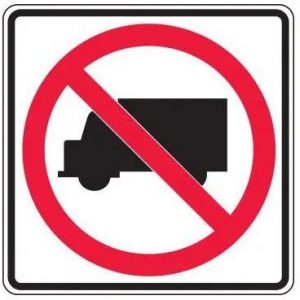
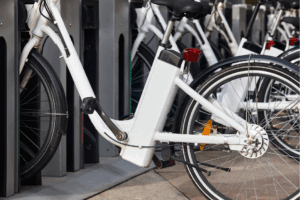
Because different classes of streets and roads are designed for different types and lengths of trip-making, not every road segment will necessarily be appropriate for every mode of travel. Pedestrians and bicycles are generally forbidden on limited-access highways, for example, because these highways need to be designed for high-speed travel by a full range of motorized vehicles, and fast-moving vehicles pose lethal danger to non-motorized travelers. By the same token, then, perhaps most local streets should be off-limits to large trucks, especially in areas with high pedestrian and bicycle volumes. Indeed, the prohibition of trucks on selected local roads is already commonplace. Some vehicle types or modes of travel are simply incompatible with the primary function of certain road segments, and the transportation planning profession should recognize this for local streets the same way it already does for limited-access highways.The Right Delivery Vehicle for the Right StreetNot every final destination for a package needs to be accessible to large trucks. Rather than proposing truck-focused modifications (wider lanes, bigger turning radii, etc.) to local streets in order to accommodate truck deliveries, transportation planners and logistics industry professionals should focus instead on matching the type of delivery vehicle to the environment in which the destination is located. For destinations located immediately adjacent to the National Highway System, or along wide, high-speed, high-volume arterial roads, deliveries by large truck are completely appropriate, since these links in the road network were designed with large vehicles in mind, and the logistics facilities that locate near the highway network generally do so precisely to minimize the need to put large trucks onto local street networks.But in high-density neighborhoods where many types of destinations are located within easy walking distance and where pedestrians and other non-motorized users are likely to be present, large trucks impose outsized safety and operational impacts. In such places, “last mile” deliveries (whether to retail stores located in downtown areas or to individual households) are better accomplished by smaller vehicles that better fit the scale of the development. This means delivery vans rather than trucks, and in some situations perhaps even electric cargo bikes, which require even less curb (or sidewalk) space than vans, generate far less noise and air pollution, and pose much less of a danger to pedestrians and other non-motorized travelers. The National Association of City Transportation Officials’ (NACTO) Urban Street Design Guide includes guidelines for choosing which size and type of delivery vehicle should serve as the default in which context for purposes of planning for goods deliveries.The Last MileIn some cases, truckload deliveries may need to be broken down into smaller loads and transferred into smaller vehicles at peripheral sites before the last-mile delivery is made. Yes, transferring goods from one mode or vehicle to another adds time—and, therefore, expense—to the total cost of a package’s journey from point of origin to final destination. But there are also costs associated with keeping goods in a larger vehicle for the final leg of the trip, namely in the form of negative externalities like safety, traffic, and pollution effects. The cost of transferring goods to smaller vehicles like vans or cargo e-bikes can be thought of as a way of capturing those externalities and making the customer pay more of the true societal costs of having their package delivered directly to their door.Besides, we already engage in transloading because some vehicle types are not a good fit for some parts of the transportation network. To take an obvious case, most goods that move by rail spend at least part of their journey on a truck, because the rail network does not reach everywhere. Even if a shipment is containerized, it still takes time to move the container from a rail car onto a truck chassis. This time is simply accepted as a part of doing business. Another example is tandem truck trailers, which are not normally allowed on surface streets because of their size, weight, and constrained maneuverability. State departments of transportation set up staging areas immediately off highway interchanges for assembling and disassembling tandem trailer combinations so that the trailers can be hauled individually to and from their off-highway destinations without creating problems on roads that were not designed to handle tandems. Amazon’s delivery centers (the facilities from which goods are actually shipped to individual homes) essentially serve this transloading function already, receiving inbound truckloads of goods on 18-wheelers from larger warehouses and dispersing them in smaller delivery vans. Staging areas for shifting goods from one mode of transport or one type of vehicle to another are not new; the key concept is to keep these transfer facilities at the edge of densely populated areas, so as to keep larger vehicles out of downtowns and residential neighborhoods.Reevaluating Streets and RoadsBecause the shift in the way people shop—and the accompanying reconfiguration of goods distribution—is likely to persist for the foreseeable future, it is important to think about what this means for the use of local street space. If goods are increasingly being shipped directly to people’s homes rather than changing hands at suburban retail complexes to which people drive their own vehicles, then local streets need to be prepared to accommodate delivery vehicles in addition to private automobiles. Even if we require that final deliveries in densely populated areas be accomplished with smaller vehicles that are more compatible with a pedestrian-focused environment, we still need to make space for those smaller vehicles in the places where they will need to stop to make their deliveries. For example, to accommodate more frequent package deliveries, the designation of loading and unloading zones may need to be expanded in areas where curb space is generally scarce and stopping in travel lanes is disruptive. Or centralized pickup facilities could be created at convenient downtown locations, at which packages could be deposited and customers could make the final pickup at their convenience (including on foot when practical), similar to picking up a package at the post office.More broadly speaking, the increasing presence of trucks on the road network is a good opportunity to revisit the difference between a street and a road. If roads are for moving people and goods from one place to another, while streets are for enabling the circulation of people within a place, then these purposes should be reflected in their design characteristics. In particular, transportation planners and engineers should stop designing local streets as if their purpose is to maximize vehicle throughput, and instead focus on features that make the street safe for pedestrians and other non-motorized users. Last year (2021) was already the deadliest year since 1989 for pedestrians and cyclists in New Jersey, thanks in part to the increasing prevalence of light trucks in the private passenger vehicle fleet, making pedestrian-friendly street design an issue of growing importance.The relatively recent increase in the popularity of home delivery means that addressing freight movement on local streets is very much a live issue. Among the 50 states, 21 have no complete streets policy at all. Of the 29 that do, only eight mention freight. Conversely, of the 50 statewide freight plans, only 16 mention complete streets (and mostly in passing), according to the FHWA/NJDOT workshop. Complete streets policies tend to be locally focused, while freight plans are regional or statewide, so they typically don’t define their issues and goals at the same scale. Addressing the disconnect between complete streets and freight at the state level thus presents New Jersey with another opportunity to serve as a national leader. We must do our best to rise to the occasion.
Related Blog

11/26/2025
08/12/2025

07/16/2025

07/15/2025

07/15/2025

07/01/2025

07/01/2025

07/01/2025

06/30/2025

06/30/2025
06/30/2025
06/26/2025
06/19/2025

06/19/2025

06/16/2025

05/21/2025
05/15/2025

04/22/2025
04/01/2025

03/14/2025

03/13/2025

02/18/2025

02/18/2025
12/02/2024
09/19/2024
08/30/2024

07/30/2024
07/30/2024

07/30/2024
07/30/2024

07/30/2024

07/30/2024
06/24/2024
06/24/2024

03/29/2024
03/29/2024
03/19/2024
03/19/2024
03/15/2024
01/29/2024
01/12/2024

12/18/2023
12/05/2023
12/05/2023
11/30/2023

10/12/2023
09/20/2023
09/18/2023

08/08/2023
07/20/2023
07/20/2023

07/20/2023

07/20/2023

07/20/2023

07/18/2023

07/18/2023
07/18/2023

07/18/2023

07/18/2023

07/17/2023

07/17/2023

07/17/2023

06/06/2023
05/17/2023
05/17/2023
05/11/2023
03/17/2023

03/16/2023

02/06/2023
01/31/2023
01/30/2023
01/20/2023
01/17/2023
01/04/2023
05/01/2023
04/19/2023
04/17/2023
11/29/2022
11/11/2022
10/25/2022

10/21/2022

10/18/2022
09/22/2022
09/21/2022

08/16/2022

08/09/2022
07/19/2022
07/19/2022

07/11/2022

07/11/2022

07/11/2022

07/11/2022

07/11/2022

07/08/2022

07/08/2022

07/08/2022

07/08/2022

07/08/2022

07/08/2022
07/08/2022

07/07/2022

07/07/2022
06/30/2022
06/29/2022

06/27/2022
06/24/2022
06/22/2022
06/10/2022
05/23/2022
05/23/2022

05/20/2022
04/25/2022
02/22/2022
02/18/2022
01/19/2022
12/07/2021

12/02/2021

11/01/2021

10/13/2021

10/13/2021

10/13/2021

09/13/2021
09/13/2021
09/13/2021

09/13/2021

07/19/2021

07/19/2021

07/19/2021
07/19/2021

06/25/2021

06/25/2021

06/25/2021

06/25/2021

06/25/2021

06/25/2021

06/25/2021

06/25/2021

06/25/2021

06/25/2021

06/25/2021

06/24/2021

06/24/2021

06/24/2021

06/15/2021

06/15/2021

06/15/2021
05/06/2021

05/04/2021
04/30/2021

04/12/2021
04/12/2021

04/12/2021
03/15/2021
03/15/2021

03/15/2021
03/05/2021
02/15/2021

02/15/2021

02/11/2021
02/11/2021

02/10/2021

02/09/2021
01/15/2021

12/21/2020

08/06/2020

08/06/2020

07/14/2020

07/14/2020
07/14/2020

06/12/2020
05/26/2020
04/19/2020
03/11/2020
03/11/2020

03/02/2020
03/02/2020

02/17/2020
11/10/2020

11/10/2020
11/09/2020

11/09/2020

11/09/2020
10/14/2020

10/14/2020

10/14/2020

10/14/2020

09/16/2020
09/16/2020

09/15/2020

09/15/2020

09/04/2020
08/11/2020

08/06/2020
07/14/2020

07/14/2020
06/12/2020

06/12/2020

06/10/2020

06/05/2020

06/03/2020
05/26/2020

05/06/2020
05/05/2020

05/05/2020
04/15/2020

04/15/2020
04/09/2020
03/13/2020

03/11/2020
03/09/2020

02/20/2020

02/17/2020
01/16/2020
01/14/2020

01/13/2020

01/07/2020
09/04/2019
08/13/2019
05/06/2019
04/24/2019
03/22/2019
03/18/2019

03/13/2019
03/01/2019
03/01/2019
03/01/2019

02/26/2019

01/14/2019
01/02/2019
01/02/2019

12/17/2019

12/12/2019

12/11/2019

12/09/2019
11/11/2019

11/11/2019
11/06/2019
11/06/2019
10/25/2019
10/18/2019
10/17/2019
10/15/2019

10/14/2019
10/14/2019
10/11/2019
10/03/2019
09/25/2019
09/23/2019
09/09/2019
09/06/2019
09/06/2019
09/06/2019

09/05/2019
09/04/2019
09/04/2019
09/04/2019

09/03/2019
08/28/2019
08/28/2019

08/26/2019
08/19/2019
08/13/2019

08/13/2019
08/12/2019

08/12/2019
08/09/2019
08/09/2019
07/29/2019
07/19/2019
07/19/2019
07/19/2019
07/17/2019
07/17/2019

07/16/2019

07/16/2019
07/16/2019
07/10/2019
07/03/2019

06/24/2019
06/21/2019
06/21/2019
06/10/2019
06/10/2019
06/07/2019
06/07/2019
06/07/2019

06/03/2019
06/03/2019
06/03/2019
06/03/2019
05/23/2019
05/22/2019

05/21/2019
05/20/2019
05/20/2019
05/20/2019
05/17/2019
05/17/2019
05/13/2019
05/13/2019
05/10/2019
05/08/2019
05/08/2019
05/08/2019
05/08/2019
05/03/2019

05/03/2019
04/29/2019
04/29/2019

04/22/2019
04/22/2019
04/19/2019
04/17/2019
04/17/2019

04/10/2019
04/10/2019
04/10/2019
04/03/2019
04/03/2019
04/03/2019
03/29/2019
03/29/2019
03/29/2019
03/29/2019
03/29/2019
03/29/2019
03/29/2019
03/29/2019
03/29/2019
03/22/2019
03/22/2019
03/18/2019
03/15/2019
03/15/2019
03/04/2019
03/01/2019
03/01/2019
03/01/2019
03/01/2019
02/27/2019

02/27/2019
02/25/2019
02/25/2019
02/25/2019
02/25/2019
02/25/2019
02/25/2019
02/18/2019
02/18/2019
02/18/2019
02/18/2019
02/06/2019
02/04/2019
02/04/2019
02/01/2019
02/01/2019
01/31/2019
01/30/2019
01/29/2019
01/28/2019
01/28/2019
01/28/2019
01/25/2019
01/25/2019
01/25/2019

01/23/2019
01/18/2019
01/18/2019
01/18/2019
01/18/2019
01/16/2019

01/10/2019
01/10/2019
01/10/2019
01/09/2019
01/07/2019
01/04/2019
01/04/2019
01/04/2019
01/04/2019
01/04/2019
12/06/2018
12/03/2018

11/07/2018

11/05/2018
11/02/2018

10/25/2018
10/23/2018

10/23/2018

10/12/2018
10/08/2018
10/02/2018
09/25/2018
09/04/2018
08/17/2018
08/17/2018
08/13/2018

07/25/2018
07/24/2018
05/31/2018
05/25/2018
05/16/2018

05/03/2018

05/01/2018
05/01/2018

04/26/2018

04/18/2018
04/10/2018

04/04/2018

04/02/2018

03/30/2018

03/29/2018

03/27/2018
03/26/2018

03/20/2018

03/16/2018
02/06/2018
01/05/2018

01/04/2018

01/04/2018

12/18/2018
09/12/2018
07/19/2018

03/28/2018

12/20/2017
12/12/2017

12/06/2017

11/30/2017

11/27/2017

11/22/2017
11/17/2017

11/03/2017
10/25/2017
10/18/2017

09/28/2017
09/27/2017

09/19/2017
09/18/2017

08/31/2017
08/31/2017
08/14/2017

08/02/2017

07/24/2017

07/20/2017

07/14/2017
06/29/2017

06/28/2017

06/12/2017

05/26/2017
05/23/2017

05/05/2017
04/12/2017

04/11/2017
04/10/2017
04/05/2017
03/27/2017

03/23/2017

03/20/2017

03/20/2017
03/20/2017
03/17/2017

03/10/2017

02/21/2017

02/17/2017
02/16/2017

02/08/2017

02/08/2017

01/26/2017

01/24/2017

01/19/2017
01/19/2017
01/10/2017

01/10/2017
12/13/2017

12/06/2016
11/18/2016
11/16/2016

11/14/2016
11/08/2016

11/01/2016

10/20/2016

10/17/2016

10/12/2016
10/05/2016

09/28/2016

09/14/2016

08/22/2016

08/10/2016

07/28/2016
07/27/2016

07/13/2016

06/24/2016

06/23/2016

06/02/2016
06/02/2016

05/26/2016

05/25/2016
05/23/2016
05/20/2016
05/20/2016

05/18/2016
05/17/2016

05/16/2016
05/13/2016

05/04/2016

04/27/2016
04/19/2016
04/18/2016
04/11/2016

04/06/2016

04/04/2016
04/04/2016

03/28/2016

03/24/2016
03/23/2016

03/22/2016

03/17/2016
03/17/2016

03/15/2016

03/07/2016
02/23/2016
02/18/2016

02/18/2016
02/09/2016
02/05/2016
01/27/2016
01/26/2016
01/22/2016

01/19/2016

01/13/2016

01/07/2016

12/15/2015

12/15/2015

12/15/2015
12/08/2015

11/19/2015
11/10/2015
11/03/2015

10/28/2015

10/27/2015

10/26/2015

10/19/2015
10/06/2015

10/05/2015

09/24/2015

09/10/2015
09/01/2015

08/19/2015

08/14/2015
08/12/2015

08/04/2015
07/30/2015

07/27/2015
07/10/2015
07/10/2015

07/08/2015
07/01/2015

06/29/2015
06/22/2015

06/18/2015
06/15/2015
05/15/2015

05/13/2015

05/13/2015

05/05/2015
05/04/2015
04/28/2015
04/28/2015
04/22/2015

04/21/2015
04/13/2015

04/10/2015

04/10/2015

03/30/2015

03/26/2015
03/18/2015

03/18/2015
03/17/2015

03/12/2015
03/10/2015
02/27/2015
02/19/2015

02/18/2015

02/17/2015
02/06/2015
02/04/2015
02/02/2015

01/27/2015
01/23/2015

01/21/2015

01/20/2015

01/15/2015

01/15/2015
01/15/2015
01/06/2015

12/19/2014

12/12/2014
12/10/2014

12/05/2014

12/02/2014

11/19/2014

11/17/2014

11/10/2014
11/06/2014

11/06/2014

11/01/2014
10/22/2014
10/21/2014

10/16/2014

10/09/2014
10/06/2014
10/06/2014

10/03/2014

10/02/2014
09/30/2014

09/23/2014
09/23/2014

09/18/2014
09/17/2014
09/16/2014
09/15/2014
09/11/2014

09/11/2014

09/09/2014

09/04/2014

08/27/2014

08/26/2014

08/25/2014
08/04/2014

08/01/2014

07/29/2014
07/25/2014
07/24/2014
07/02/2014
06/26/2014
06/26/2014

06/25/2014

06/23/2014
06/18/2014
06/18/2014
06/05/2014
06/03/2014
05/20/2014
05/16/2014
05/14/2014
05/06/2014
04/24/2014

04/17/2014

04/11/2014

04/10/2014

04/04/2014
04/04/2014

04/03/2014

04/03/2014

04/01/2014
04/01/2014

03/21/2014

03/20/2014

03/20/2014

03/20/2014
03/20/2014

03/11/2014

03/07/2014

03/05/2014

02/25/2014

02/20/2014

02/18/2014
02/18/2014
02/14/2014
02/10/2014
02/10/2014
02/07/2014

02/06/2014
02/04/2014
01/29/2014
01/28/2014

01/28/2014

01/16/2014

02/12/2014
11/19/2013
11/14/2013
11/13/2013
11/05/2013

11/04/2013
11/01/2013
10/30/2013
10/25/2013

10/22/2013
10/21/2013
10/20/2013
10/20/2013
10/16/2013
10/16/2013

10/10/2013
10/02/2013

09/26/2013
09/25/2013
09/18/2013

09/10/2013
08/19/2013
08/08/2013
08/05/2013
08/02/2013
07/24/2013
07/24/2013
07/23/2013
07/22/2013
07/22/2013

07/22/2013
07/19/2013
07/18/2013
07/18/2013

07/09/2013
07/02/2013

06/25/2013

06/18/2013

06/17/2013
06/13/2013

06/12/2013
06/12/2013

06/12/2013

06/03/2013

05/21/2013

05/16/2013

05/16/2013

05/07/2013
04/30/2013
04/29/2013
04/29/2013

04/11/2013

04/04/2013
04/04/2013
04/01/2013
03/26/2013

03/25/2013
03/25/2013

03/22/2013
03/20/2013

03/19/2013

03/13/2013
03/13/2013
03/11/2013
03/07/2013
03/04/2013
03/04/2013
03/04/2013

02/27/2013
02/21/2013

02/20/2013

02/05/2013
01/31/2013

01/30/2013

01/24/2013

01/16/2013
01/03/2013
01/02/2013

12/10/2012

11/30/2012

11/21/2012

11/20/2012

11/20/2012

11/19/2012
11/19/2012

11/15/2012
11/15/2012

11/14/2012

11/13/2012

11/12/2012

11/12/2012

11/08/2012
11/02/2012

11/01/2012

10/17/2012

10/11/2012
09/24/2012
09/19/2012
09/12/2012
08/29/2012
08/03/2012
07/18/2012

07/17/2012
06/28/2012
06/19/2012
06/12/2012
06/01/2012
05/31/2012

05/31/2012

05/24/2012

05/21/2012
05/18/2012
05/14/2012
05/01/2012

04/30/2012
04/20/2012

04/18/2012

04/18/2012
04/13/2012
04/03/2012

04/02/2012
03/30/2012

03/28/2012
03/22/2012

03/22/2012
03/21/2012

03/21/2012
03/05/2012

02/13/2012
02/13/2012

02/09/2012
02/09/2012
01/27/2012
01/26/2012

01/19/2012
01/17/2012
01/11/2012

01/09/2012
01/04/2012

12/13/2012
09/12/2012
12/14/2011

12/09/2011
12/09/2011

12/08/2011
12/01/2011
12/01/2011
11/21/2011
11/17/2011
11/17/2011
11/16/2011

11/14/2011

11/14/2011
11/03/2011

11/02/2011

11/01/2011

10/27/2011

10/23/2011

10/19/2011

10/14/2011
10/12/2011

10/11/2011

10/05/2011

10/04/2011
09/29/2011
09/28/2011
09/22/2011
09/22/2011
09/13/2011
09/07/2011
09/01/2011
08/25/2011
08/24/2011
08/24/2011
08/19/2011

08/12/2011
08/11/2011

08/11/2011

08/05/2011
08/01/2011

08/01/2011
07/28/2011
07/21/2011
07/21/2011
07/19/2011

07/07/2011
07/06/2011
07/05/2011
06/29/2011
06/27/2011
06/26/2011

06/23/2011
06/20/2011

06/17/2011
06/15/2011
06/13/2011

06/11/2011
06/07/2011
06/03/2011

06/01/2011
05/26/2011
05/24/2011

05/23/2011

05/17/2011
05/17/2011
05/13/2011

05/12/2011

05/04/2011

04/26/2011
04/25/2011

04/21/2011

04/08/2011

04/01/2011

03/31/2011
03/31/2011
03/28/2011

03/21/2011

03/16/2011

03/16/2011

03/10/2011

03/08/2011

03/03/2011
02/28/2011
02/25/2011
02/24/2011
02/24/2011
02/22/2011
02/21/2011
02/18/2011
02/17/2011
02/16/2011
02/16/2011
02/15/2011
02/15/2011
02/14/2011
02/10/2011
02/08/2011
02/07/2011
01/31/2011

01/31/2011
01/31/2011
01/20/2011
01/19/2011
01/18/2011
01/14/2011
01/13/2011
01/11/2011
01/07/2011
01/06/2011
01/05/2011
01/05/2011
03/02/2011
12/28/2010
12/21/2010
12/21/2010
12/21/2010
12/17/2010
12/17/2010

12/15/2010
12/14/2010
12/14/2010
12/09/2010
12/09/2010
12/02/2010
11/19/2010
11/16/2010
11/15/2010

11/10/2010
10/27/2010
10/26/2010
10/15/2010
10/14/2010
10/12/2010

10/08/2010
10/07/2010
10/05/2010
10/01/2010
09/30/2010
09/24/2010
09/20/2010
09/18/2010
09/15/2010
09/01/2010
08/25/2010
08/24/2010

08/04/2010
08/03/2010
07/30/2010
07/29/2010
07/28/2010
07/26/2010

07/23/2010

07/23/2010
07/08/2010
07/06/2010
06/18/2010

06/17/2010
06/17/2010

06/10/2010
06/09/2010

06/02/2010

05/26/2010

05/25/2010
05/24/2010
05/14/2010

05/13/2010
05/12/2010
05/11/2010

05/06/2010

05/03/2010
04/28/2010
04/27/2010
04/26/2010

04/22/2010

04/22/2010
04/22/2010

04/20/2010

04/19/2010
04/16/2010
04/09/2010
04/05/2010
04/01/2010
03/31/2010
03/30/2010
03/25/2010
03/11/2010

03/10/2010

03/05/2010

03/01/2010

02/18/2010

02/17/2010
02/16/2010
02/11/2010

02/11/2010
02/05/2010
01/29/2010
01/28/2010
01/21/2010
01/14/2010
01/11/2010
02/10/2010
12/23/2009
12/22/2009
12/17/2009
12/04/2009

11/25/2009
11/17/2009

11/04/2009
11/03/2009
10/29/2009
10/27/2009

10/26/2009
10/19/2009
10/15/2009

10/15/2009
10/13/2009

10/09/2009
10/08/2009
10/05/2009

10/01/2009
09/30/2009
09/28/2009
09/27/2009
09/27/2009
09/27/2009
09/27/2009

08/19/2009
07/15/2009
07/01/2009
06/24/2009
06/18/2009
06/01/2009
05/20/2009
05/04/2009
04/20/2009
04/03/2009
03/18/2009
03/04/2009
02/18/2009
02/04/2009
01/15/2009
12/31/2008
12/17/2008
12/05/2008
11/24/2008
11/03/2008
10/21/2008
10/06/2008
09/22/2008
09/05/2008
08/06/2008
07/17/2008
07/02/2008
06/13/2008
06/02/2008
05/15/2008
05/07/2008
04/14/2008
04/04/2008
03/19/2008
03/06/2008
02/26/2008
02/20/2008
01/17/2008
12/28/2007
12/19/2007
12/07/2007
11/20/2007

10/31/2007
10/16/2007
10/03/2007
09/18/2007
08/24/2007
07/27/2007
06/19/2007
06/01/2007
05/16/2007
05/02/2007
04/17/2007
04/07/2007
03/15/2007
02/20/2007
01/31/2007
01/12/2007
12/28/2006
12/18/2006
11/28/2006
11/26/2006
11/03/2006
10/20/2006
09/29/2006
09/14/2006

08/31/2006
06/21/2006
05/31/2006
05/16/2006
04/21/2006
03/31/2006
03/17/2006
03/06/2006
02/16/2006
01/31/2006
07/28/2006
12/29/2005
12/19/2005
11/30/2005
11/18/2005
10/31/2005
10/21/2005
09/30/2005
09/19/2005
08/31/2005
06/30/2005
05/31/2005
05/13/2005
04/29/2005
04/15/2005
03/04/2005
02/18/2005
01/28/2005
01/07/2005
07/29/2005
12/20/2004
12/12/2004
12/03/2004
11/19/2004
11/05/2004
10/22/2004
10/08/2004
09/20/2004
08/10/2004
07/20/2004
06/30/2004
06/11/2004
06/01/2004
05/21/2004
04/30/2004
04/20/2004
03/18/2004
03/02/2004
02/13/2004
01/30/2004
01/19/2004
12/31/2003
11/26/2003
11/14/2003
10/24/2003
10/11/2003
09/23/2003
07/31/2003
07/20/2003
06/20/2003
06/05/2003
05/16/2003
04/18/2003
03/31/2003
03/21/2003
02/28/2003
02/13/2003
01/31/2003
12/13/2002
11/14/2002
11/14/2002
10/31/2002
10/11/2002
09/25/2002
08/30/2002
08/16/2002
08/02/2002
07/12/2002
06/22/2002
05/17/2002
04/30/2002
04/19/2002
03/26/2002
03/08/2002
02/18/2002
01/23/2002
01/10/2002
12/11/2001
11/30/2001
10/31/2001
10/10/2001
09/20/2001
08/31/2001
08/17/2001
08/01/2001
07/12/2001
06/28/2001
05/31/2001
05/11/2001
04/30/2001
03/30/2001
03/14/2001
02/13/2001
01/25/2001
01/10/2001
06/19/2001
12/22/2000
12/08/2000
11/27/2000
11/08/2000
10/23/2000
10/05/2000
09/22/2000
09/01/2000
08/18/2000
07/10/2000
06/19/2000
06/02/2000
05/15/2000
05/03/2000