

 2025 Smart Growth Awards
Nelson Glass House
An exemplar of “missing middle” housing that seamlessly fits into the downtown neighborhood fabric, creating a mix of uses and increased density in an extremely walkable location.


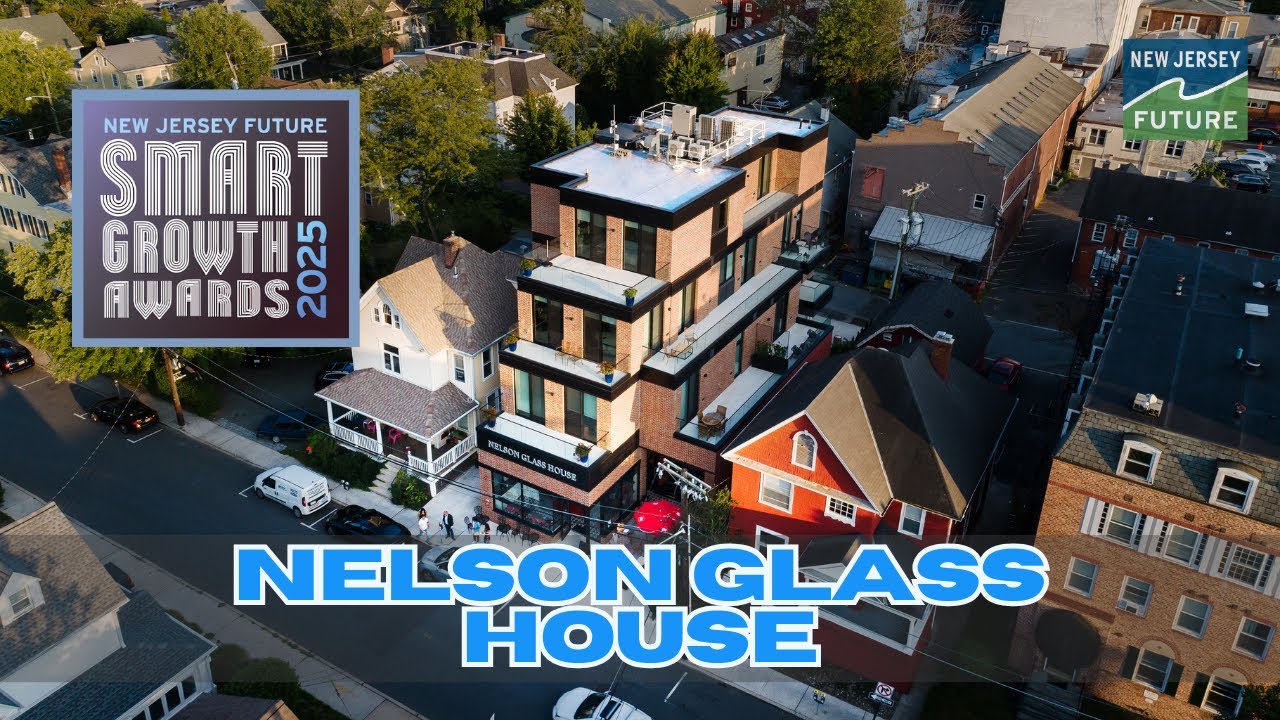

Built in the 1960s, a one-story industrial building once housed the Nelson Glass & Aluminum Company. When the opportunity came to reimagine the site, the vision was clear: preserve its industrial character while adapting it for modern use. The result is the Nelson Glass House, a mixed-use development that combines retail, housing, and walkability in the heart of downtown Princeton.
The redeveloped project includes two retail spaces on the ground floor, a café with outdoor seating and a private cigar lounge, along with three new upper stories that house six apartments. Five are market-rate, and one is an affordable rental unit. This mix of uses revives a traditional development pattern once common in Princeton, where shops occupied the ground level and residents lived above.
The design of the project aimed to fit into the surrounding neighborhood. The upper floors step back from the street, preserving light and air for neighboring properties and maintaining the existing residential view corridor. These setbacks double as terraces for residents, offering views across the community. At the rear, the building rises to match the scale of the Central Business District. The approach ensures that the building both respects the historic street and contributes to the larger downtown fabric.
This project is a unique example of “missing middle” housing; units that fall between single-family homes and large apartment complexes. These types of housing help increase density in a way that fits into existing neighborhoods, addressing affordability and accessibility challenges while supporting walkable, transit-oriented living. For Princeton, which faces a shortage of housing options, this project represents a practical step toward meeting demand.
The Nelson Glass House has also sparked additional investment nearby. New apartment complexes on Tulane Street and other developments have followed its example, showing how one project can encourage broader recognition of the need for density. Since its opening, the building has been viewed as a success story for balancing density, affordability, and livability.
New Jersey Future is proud to honor Nelson Glass House with a 2025 Smart Growth Award. This type of project demonstrates how small sites can contribute to larger solutions. By layering housing above retail, maintaining sensitivity to context, and adding affordable options, the project shows that there is an important role for