

 2013 Smart Growth Award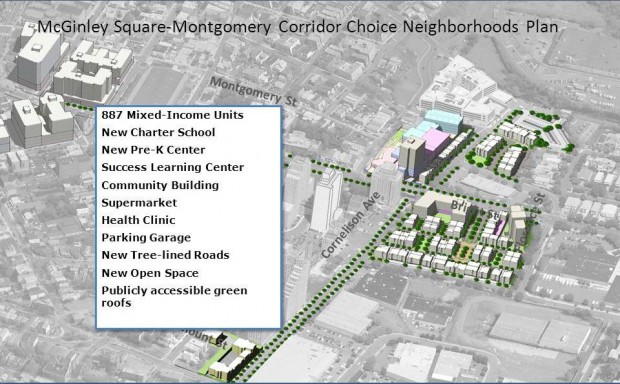

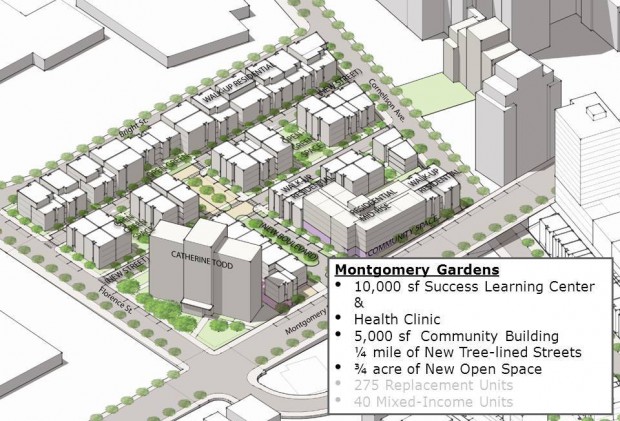
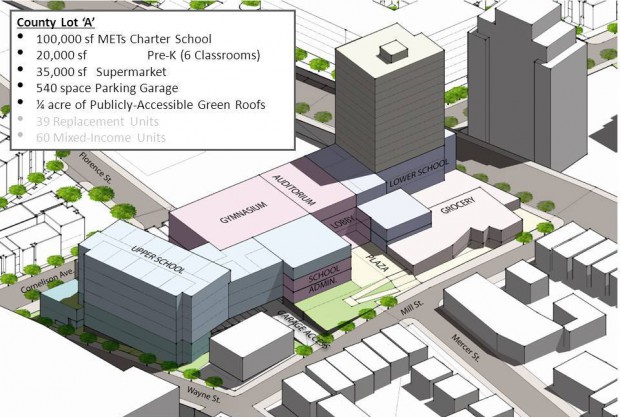
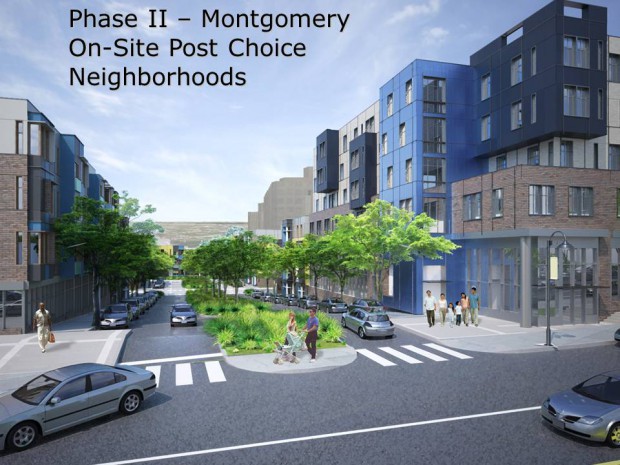
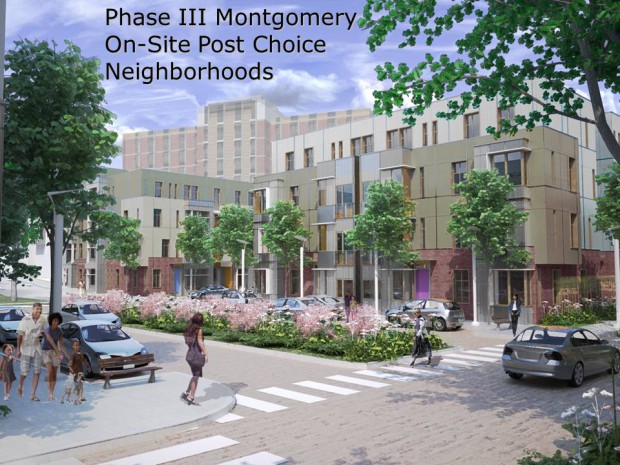

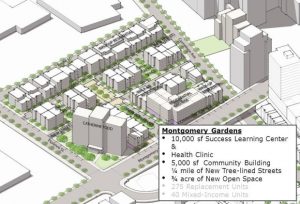

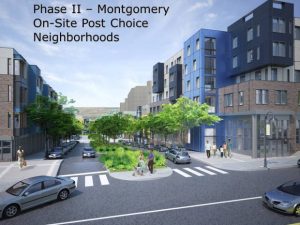
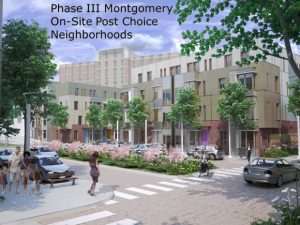

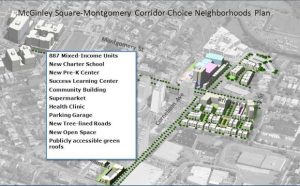
Perhaps the most important element in the plan was the intensive involvement of a broad and diverse stakeholder community. Six public planning meetings were held, attended by more than 250 participants, and many small task force meetings also took place. Meetings were convened at a range of times and locations to enable as many residents as possible to attend, and communications and outreach were done in a variety of languages. Resident feedback led to several revisions of many of the elements of the plan, including the inclusion of a supermarket, pre-K facilities, and more space available to the public for recreational activities.
The Choice Neighborhoods plan is a community-driven plan in the truest sense: The community provided its guiding principles; reviewed building design; and through several surveys decided the mix of uses and their locations. Public housing residents helped select the housing partner; determined the order in which the phases would be developed – a rental rehabilitation for seniors would be the first – negotiated the terms of resident relocation; and helped with the design. Finally, a participatory evaluation system has been established to ensure that community-set goals are being met on an ongoing basis.
And the result? The Jersey City Housing Authority, no stranger to hostile public meetings, knew it had created a different planning dynamic when, at the final public meeting to review plan elements before submission to the federal government, something unprecedented happened: The audience applauded.
Supporting Partners: Wallace Roberts Todd LLC; Better Tomorrows